Artificial Intelligence (AI) is transforming various aspects of healthcare, and dentistry is no exception. With AI-powered dental imaging, dentists can now diagnose oral health issues with greater accuracy, efficiency, and speed. From early cavity detection to complex orthodontic assessments, AI is revolutionizing dental care. In this blog, we’ll explore how AI is enhancing dental imaging, its benefits, and what the future holds for AI-driven dentistry.
The Evolution of Dental Imaging
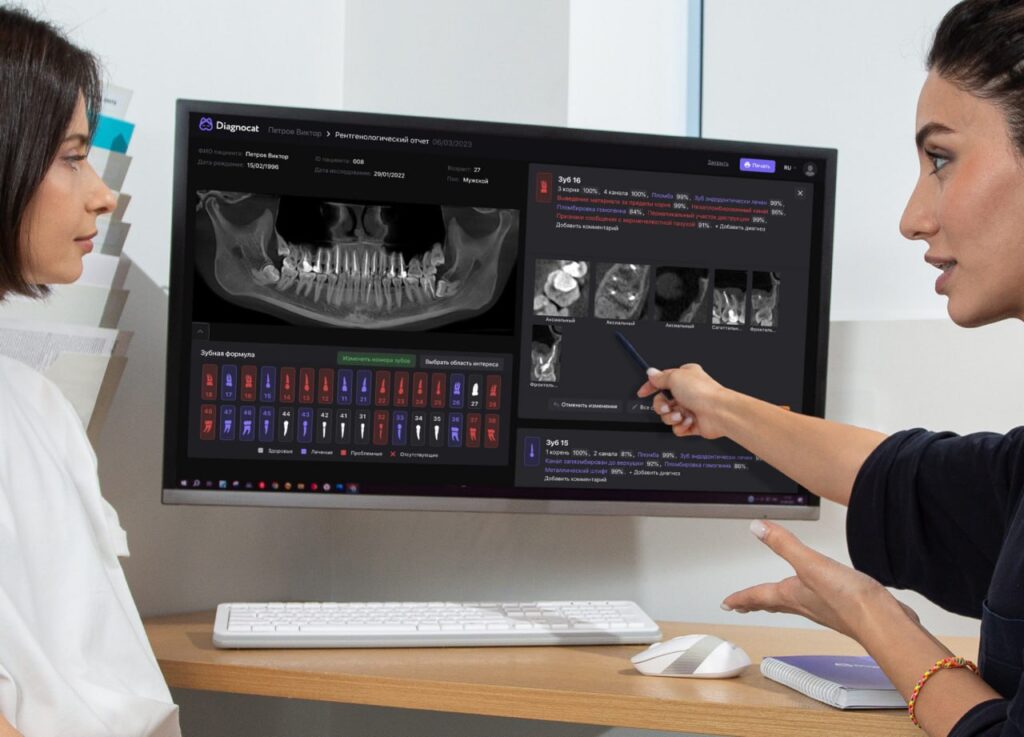
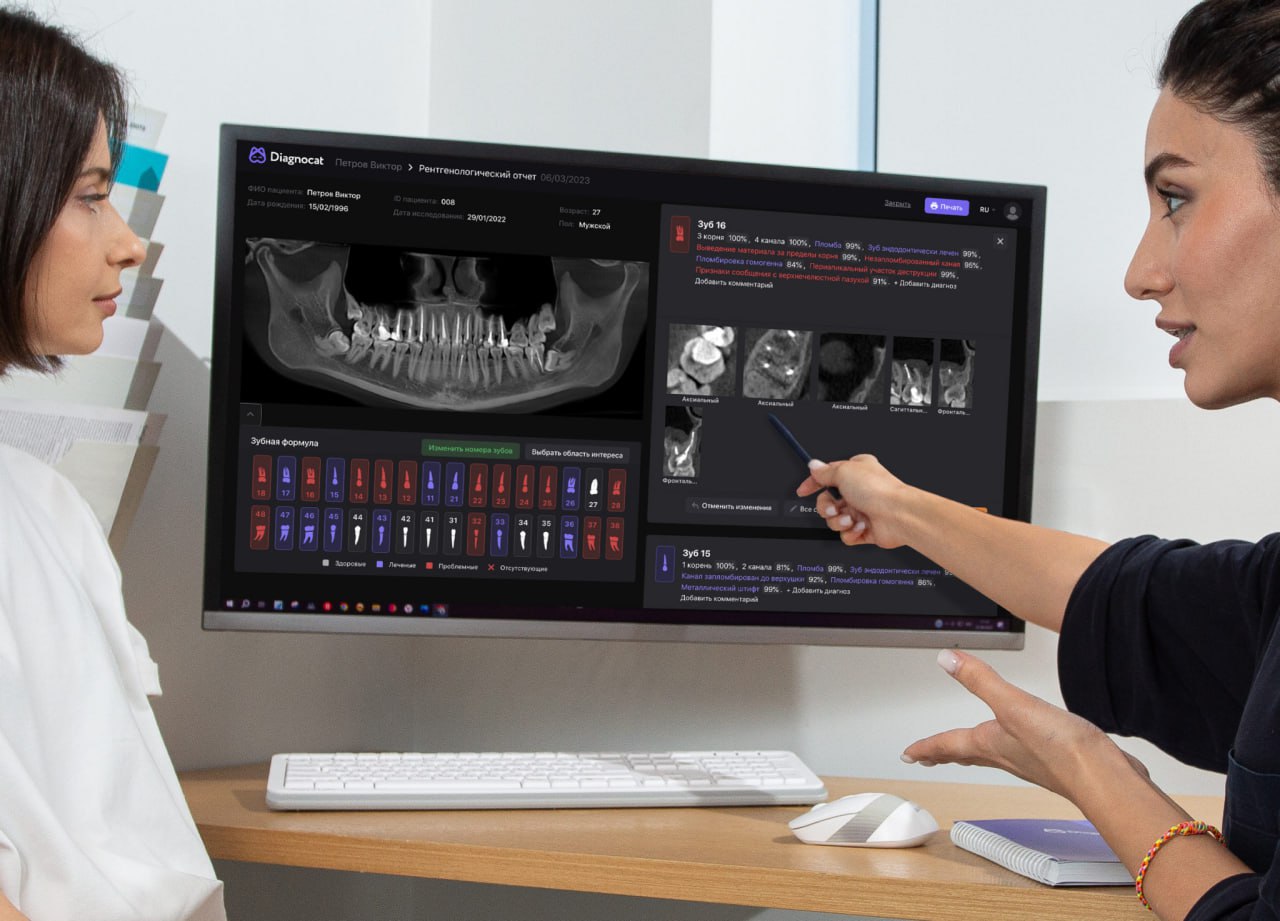
Traditional dental imaging methods, such as X-rays and CT scans, have long been essential tools for diagnosing oral health conditions. However, these methods often rely heavily on the expertise of dentists to interpret results, leading to potential errors or missed diagnoses.
With the integration of AI, dental imaging has become more precise and automated, reducing the risk of human error and significantly improving early disease detection.
How AI is Transforming Dental Imaging
AI in dental imaging primarily uses machine learning and deep learning algorithms to analyze and interpret dental scans. Here’s how AI is making a difference:
1. Enhanced Diagnostic Accuracy
AI algorithms can detect cavities, gum disease, root fractures, and even early-stage oral cancer with greater precision than traditional methods. These algorithms are trained on vast datasets, allowing them to recognize patterns and anomalies that may be missed by the human eye.
2. Faster Image Analysis
AI-powered dental imaging software can analyze thousands of images in seconds, significantly reducing the time required for diagnosis. This means patients receive faster results, leading to quicker treatment decisions.
3. Predictive Analytics and Early Detection
AI can assess patterns in dental images and predict potential oral health issues before they become severe. For example, AI can identify early signs of tooth decay or gum disease, allowing dentists to take preventive measures.
4. Automated Treatment Planning
AI-powered systems can assist dentists in planning treatments for orthodontics, implants, and root canals. By analyzing 3D dental scans, AI can suggest the best treatment approach, reducing manual effort and improving precision.
5. Improved Patient Education and Communication
AI-generated visualizations help dentists explain diagnoses and treatment options to patients more effectively. With clear AI-powered images and predictive models, patients can better understand their oral health conditions and treatment plans.
6. AI in Radiology for Dental Imaging
AI-integrated radiology tools can enhance image quality, filter out noise, and highlight critical areas of concern. This is particularly useful in detecting bone loss, fractures, and hidden infections that might be challenging to identify with the naked eye.
Applications of AI in Different Dental Specialties
AI is being widely used across various dental fields, including:
✔ General Dentistry: Detects cavities, cracks, and infections from X-rays.
✔ Orthodontics: Analyzes 3D scans to create customized braces and aligners.
✔ Endodontics: Identifies root fractures and infections for better root canal treatments.
✔ Periodontics: Detects early signs of gum disease and bone loss.
✔ Oral Pathology: Helps in the early detection of oral cancer and other abnormalities.
Benefits of AI in Dental Imaging
✅ Higher Accuracy: AI eliminates subjective interpretation and provides more precise results.
✅ Time Efficiency: Rapid analysis speeds up diagnosis and treatment planning.
✅ Better Patient Outcomes: Early detection leads to better treatment success rates.
✅ Cost-Effective: Reduces the need for repeated scans, lowering healthcare costs.
✅ Scalability: AI can handle large amounts of data, making it ideal for dental clinics and hospitals
Future of AI in Dental Imaging
The future of AI in dental imaging looks promising. With advancements in deep learning, cloud computing, and big data, AI will continue to refine its diagnostic capabilities. Here are some future possibilities:
🔹 AI-powered teledentistry: Remote diagnosis and consultation through AI-analyzed images.
🔹 Integration with Augmented Reality (AR): Real-time AI-guided procedures using AR.
🔹 Self-Diagnostic Apps: AI-driven apps allowing patients to scan their teeth for early detection.
🔹 Personalized Treatment Plans: AI customizing treatments based on individual patient data.