
Table of Contents
- Introduction
- Understanding the Thyroid Gland
- Common Thyroid Disorders
- Current Challenges in Thyroid Diagnosis and Management
- Introduction to AI in Healthcare
- Applications of AI in Thyroid Health
- 6.1 Predictive Analytics
- 6.2 Imaging and Diagnostics
- 6.3 Personalized Treatment
- 6.4 Virtual Assistants and Chatbots
- 6.5 Remote Monitoring and Wearables
- Real-World Examples and Case Studies
- Benefits of AI in Thyroid Management
- Limitations and Ethical Considerations
- Future Outlook
- Conclusion
1. Introduction
Thyroid disorders affect more than 200 million people worldwide, yet many cases go undiagnosed for years. The symptoms are often subtle, overlapping with common issues like stress, fatigue, or hormonal imbalances. This diagnostic complexity makes thyroid health an ideal candidate for disruption by Artificial Intelligence (AI).
AI—once the stuff of science fiction—is now changing the healthcare ecosystem. From early disease detection to personalized medicine, AI offers a promising solution for managing chronic conditions like thyroid disorders. This blog dives into how AI is revolutionizing thyroid care, making it more accurate, personalized, and accessible.
2. Understanding the Thyroid Gland
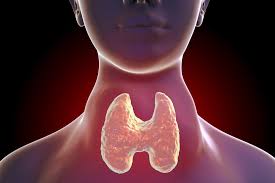
The thyroid is a butterfly-shaped gland located in the neck, just below the Adam’s apple. Despite its small size, it plays a massive role in regulating metabolism, body temperature, heart rate, and energy levels by producing hormones like:
- Triiodothyronine (T3)
- Thyroxine (T4)
- Thyroid Stimulating Hormone (TSH) (produced by the pituitary gland)
When this gland becomes dysfunctional, the ripple effects are felt throughout the body.
3. Common Thyroid Disorders
Hypothyroidism
- Underactive thyroid gland
- Symptoms: fatigue, weight gain, depression, cold intolerance, dry skin
- Common cause: Hashimoto’s Thyroiditis (autoimmune)
Hyperthyroidism
- Overactive thyroid gland
- Symptoms: weight loss, anxiety, heat intolerance, palpitations
- Common cause: Graves’ Disease (autoimmune)
Goiter
- Enlargement of the thyroid gland
- May or may not affect hormone levels
Thyroid Nodules and Cancer
- Nodules can be benign or malignant
- Requires imaging and biopsy for diagnosis
4. Current Challenges in Thyroid Diagnosis and Management
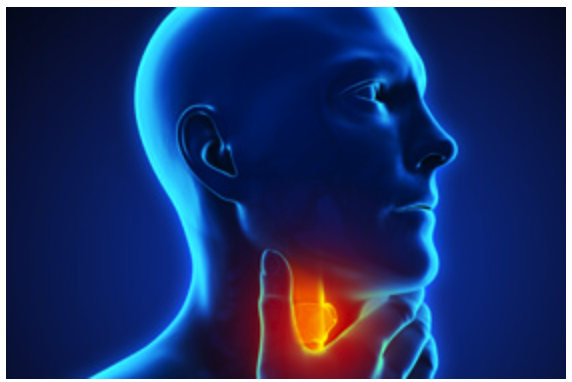
Despite the availability of diagnostic tools, thyroid disorders often go unnoticed due to:
- Nonspecific symptoms that overlap with other conditions
- Inconsistent lab results influenced by external factors
- Limited access to endocrinologists in rural or underserved areas
- Lack of long-term monitoring tools for patients
These challenges underscore the need for innovation—and that’s where AI steps in.
5. Introduction to AI in Healthcare
Artificial Intelligence refers to the ability of machines to perform tasks that typically require human intelligence. In healthcare, AI is used for:
- Pattern recognition
- Predictive analytics
- Natural language processing
- Machine learning (ML) and deep learning (DL)
- Image classification and analysis
AI systems learn from vast datasets, improving over time. In thyroid care, this means better predictions, early detection, and customized treatment plans.
6. Applications of AI in Thyroid Health
6.1 Predictive Analytics for Early Detection
AI algorithms can analyze massive datasets including EHRs, lab reports, symptoms, genetics, and even voice patterns. With this data, AI can:
- Flag patients at risk for hypothyroidism or hyperthyroidism
- Identify potential autoimmune thyroid conditions based on early biomarkers
- Reduce time to diagnosis significantly
For instance, researchers have developed models that can predict thyroid dysfunction before hormone levels show abnormalities.
6.2 AI in Imaging and Diagnostics
AI excels at analyzing medical images. In thyroid care, it’s used to:
- Detect and classify thyroid nodules via ultrasound
- Differentiate between benign and malignant nodules
- Reduce the need for invasive biopsies
- Identify vascular patterns and calcifications in nodules
Studies have shown that AI models like convolutional neural networks (CNNs) can outperform radiologists in diagnosing thyroid cancer from ultrasound images.
6.3 Personalized Treatment Recommendations
Thyroid medication management—especially for hypothyroidism—is highly individualized. AI can:
- Track hormone levels over time
- Adjust levothyroxine dosage based on real-time data
- Analyze patient lifestyle, weight, and comorbidities for tailored treatment
- Reduce trial-and-error in dose adjustments
Personalized care powered by AI leads to better patient satisfaction and clinical outcomes.
6.4 AI Chatbots and Virtual Assistants
AI-powered virtual assistants provide:
- 24/7 support for patients with thyroid conditions
- Medication reminders
- Symptom tracking
- Answers to basic questions about thyroid health
These tools improve patient engagement, reduce hospital visits, and offer emotional support.
6.5 Remote Monitoring and Wearables
Wearables integrated with AI can monitor:
- Heart rate (often elevated in hyperthyroidism)
- Sleep quality (affected by both hypo- and hyperthyroidism)
- Weight fluctuations
- Voice changes (common in thyroid nodules or goiter)
AI can flag abnormal patterns, alerting both the patient and physician for timely action.
7. Real-World Examples and Case Studies
- EndoBrain (Japan): An AI system used to detect thyroid cancer and gastrointestinal abnormalities with high precision.
- Butterfly Network: A portable AI-powered ultrasound device used to scan thyroid glands in remote areas.
- Thyroid.AI (Startup): Uses AI to provide early predictions of thyroid disease risk using only symptom-based inputs and basic blood work.
These tools are redefining thyroid care—making it smarter, faster, and more reliable.
8. Benefits of AI in Thyroid Management
| Benefit | Description |
|---|---|
| Early Detection | Identifies thyroid issues before symptoms become severe |
| Accuracy | Improves diagnostic precision using image and data analysis |
| Accessibility | Extends care to remote and underserved populations |
| Efficiency | Reduces wait times and unnecessary tests |
| Personalization | Delivers customized treatment plans |
| Cost Reduction | Minimizes hospital visits and unnecessary procedures |
9. Limitations and Ethical Considerations
Despite its promise, AI in thyroid care is not without challenges:
- Data Privacy: Sensitive patient data must be securely handled
- Bias in Training Data: AI models trained on limited datasets may misdiagnose across demographics
- Over-Reliance on AI: Human oversight is essential
- Regulatory Hurdles: AI tools must meet stringent healthcare regulations
Building ethical, transparent, and unbiased AI is key to safe adoption in medical practice.
10. Future Outlook
In the next 5–10 years, we can expect:
- AI-powered mobile thyroid scanning apps
- Widespread integration of AI in electronic health records
- Real-time hormone monitoring using biosensors
- Development of AI endocrinologist assistants
- Enhanced clinical decision support systems (CDSS)
The synergy between AI and endocrinology will usher in a new era of precision medicine.
11. Conclusion
AI is transforming thyroid care from reactive to proactive. It’s enabling earlier diagnosis, smarter imaging, personalized medication plans, and continuous monitoring. While human expertise remains irreplaceable, AI serves as a powerful tool in the hands of doctors and patients alike.
As we move forward, embracing AI in thyroid healthcare not only improves outcomes—it brings us closer to a future where no thyroid condition goes undiagnosed or untreated.
Interested in more AI and health content? Stay tuned to our blog for regular updates!


One thought on “AI and Thyroid: Transforming the Landscape of Thyroid Diagnosis and Management”