Table of Contents
- Introduction: The Journey of Hope
- What is IVF? A Simple Explanation
- The Challenges with Traditional IVF
- Enter Artificial Intelligence: Changing the Fertility Game
- How AI is Transforming IVF Step by Step
- A. AI in Diagnosing Fertility Issues
- B. AI in Selecting the Best Eggs and Sperm
- C. AI in Embryo Selection
- D. AI in Predicting IVF Success
- AI and Personalized IVF Treatment Plans
- AI in Embryology Labs: Meet the “Digital Embryologist”
- Reducing Human Error and Improving Efficiency
- Emotional Benefits: Less Uncertainty, More Confidence
- Real-Life Success Stories with AI in IVF
- Ethical Questions and Concerns
- The Future of IVF with Artificial Intelligence
- Final Thoughts: A New Era of Parenthood
1. Introduction: The Journey of Hope
For millions of couples around the world, the path to parenthood isn’t always easy. Some face years of trying to conceive without success. For others, medical conditions make natural conception nearly impossible. In these moments of frustration and heartbreak, science steps in — offering hope through a process called IVF (In Vitro Fertilization).
Now, there’s a new player in the fertility journey: Artificial Intelligence. With its power to analyze, predict, and personalize, AI is revolutionizing how IVF is done — making it more efficient, more precise, and in many cases, more successful.
In this blog, we’ll walk you through how AI is being used in IVF — in a way that’s easy to understand, deeply human, and full of hope.
2. What is IVF? A Simple Explanation
Let’s start with the basics.
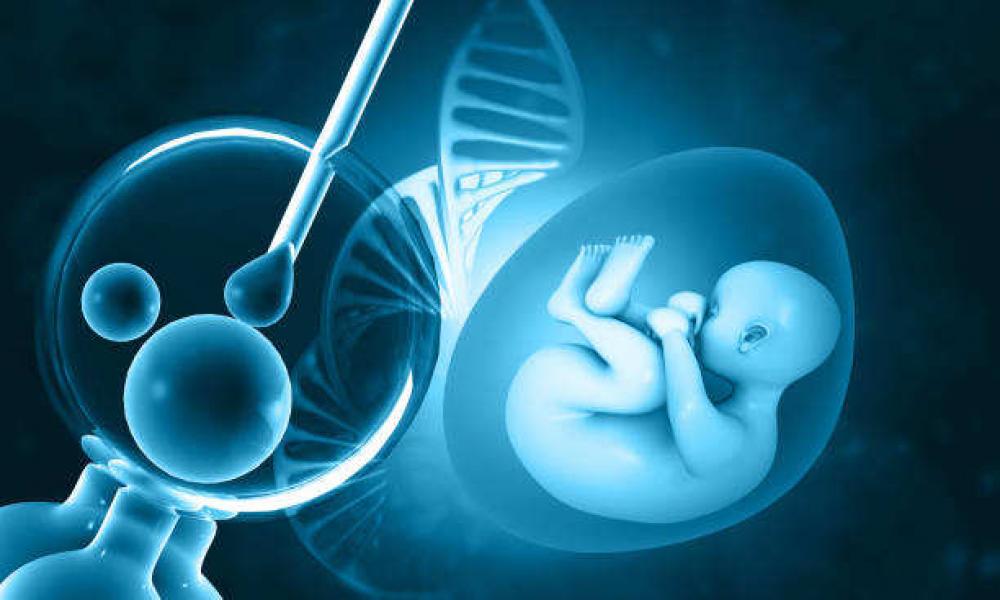
IVF, or In Vitro Fertilization, is a medical procedure where a woman’s eggs are collected and fertilized with sperm outside the body, in a lab. Once the egg is successfully fertilized and becomes an embryo, it is placed back into the woman’s uterus, with the hope that it will grow into a healthy baby.
The Steps of IVF:
- Ovarian stimulation – Hormone injections help the ovaries produce multiple eggs.
- Egg retrieval – Eggs are collected from the ovaries using a small surgical procedure.
- Sperm collection – Sperm is collected from the male partner or donor.
- Fertilization – Eggs and sperm are mixed in the lab.
- Embryo development – Fertilized eggs grow into embryos over a few days.
- Embryo transfer – The best embryo is selected and implanted in the uterus.
- Pregnancy test – A couple of weeks later, a test checks for pregnancy.
It sounds straightforward, but it’s a complex, emotional, and expensive journey — and that’s where AI is starting to make a real difference.
3. The Challenges with Traditional IVF
IVF has helped millions of families around the world. But it comes with its challenges:
- Success rates can be low – Often below 50%, especially as the woman’s age increases.
- The process is physically and emotionally taxing.
- It’s expensive, with multiple rounds often needed.
- Embryo selection is subjective, depending on the embryologist’s experience.
- Results are unpredictable, and the reasons for failure aren’t always clear.
Wouldn’t it be amazing if we could make IVF smarter, faster, and more accurate?
That’s exactly what AI is doing.
4. Enter Artificial Intelligence: Changing the Fertility Game
Artificial Intelligence is like a super-smart assistant. It can:
- Analyze huge amounts of data quickly
- Find patterns that humans might miss
- Predict outcomes with high accuracy
- Learn from past cases to improve future ones
In the context of IVF, AI is helping doctors make better decisions, tailor treatments for each couple, and increase the chances of success.
Let’s break down how AI is helping at every stage of the IVF journey.
5. How AI is Transforming IVF Step by Step
A. AI in Diagnosing Fertility Issues
Before IVF begins, couples often undergo tests to understand why they’re not conceiving naturally. These tests include hormone levels, sperm quality, ovulation tracking, and more.
AI can take all this data and:
- Analyze patterns
- Compare with thousands of other patients
- Identify possible reasons for infertility that doctors might overlook
- Recommend further tests or early interventions
It’s like having an expert second opinion — instantly.
B. AI in Selecting the Best Eggs and Sperm
Not all eggs and sperm are created equal. Some may look healthy but fail to fertilize. Others might have DNA issues that affect embryo development.
AI tools use image recognition and machine learning to assess:
- The maturity and quality of eggs
- The shape, movement, and health of sperm
- Which combinations are most likely to lead to successful fertilization
This results in higher quality embryos — and better chances of pregnancy.
C. AI in Embryo Selection
This is one of the biggest breakthroughs.
Traditionally, embryologists decide which embryo to transfer based on appearance — size, shape, and movement. But it’s subjective and varies between professionals.
AI tools can now:
- Scan time-lapse videos of embryos developing
- Analyze subtle features invisible to the human eye
- Score embryos based on likelihood of successful implantation
- Learn from thousands of previous IVF cases
Some AI systems claim up to 20-30% better success rates using these techniques.
D. AI in Predicting IVF Success
Using the data from previous IVF cycles, genetic profiles, age, hormone levels, and embryo quality, AI can:
- Predict the chances of pregnancy
- Recommend the best day for embryo transfer
- Estimate the number of embryos to use
- Minimize risk of multiple pregnancies
It helps set realistic expectations and reduces the emotional toll of failed cycles.
6. AI and Personalized IVF Treatment Plans
No two patients are the same. That’s why personalized treatment matters.
AI can customize IVF protocols based on:
- Your body’s hormone response
- Medical history
- Lifestyle factors (weight, smoking, stress)
- Genetic data
Instead of a “one-size-fits-all” approach, you get a plan that’s made just for you.
And in medicine, personalization is powerful.
7. AI in Embryology Labs: Meet the “Digital Embryologist”
AI is becoming the right hand of embryologists — not replacing them, but empowering them.
Tools like:
- Time-lapse incubators that record embryo growth every few minutes
- AI software that scores embryos while they grow
- Smart microscopes that identify anomalies in real-time
This means:
- Less room for human error
- Consistent evaluations
- Faster decision-making
It’s like having a top embryologist on call 24/7.
8. Reducing Human Error and Improving Efficiency
Human decisions can be emotional, inconsistent, or just tired. AI is neutral — and that can be a good thing.
Benefits of AI in IVF labs:
- Fewer mistakes in labeling and tracking embryos
- Better documentation and data handling
- Clear visual reports for patients and doctors
- Faster response times when things go wrong
This allows the medical team to focus on what really matters — caring for the patient.
9. Emotional Benefits: Less Uncertainty, More Confidence
Let’s not forget the emotional rollercoaster of IVF.
The anxiety of waiting. The disappointment of failure. The fear of “what if this doesn’t work?”
AI helps by:
- Offering clear predictions
- Explaining why certain choices are made
- Reducing trial-and-error cycles
- Giving patients more transparency and control
And when patients feel informed and supported, they cope better — physically and emotionally.
10. Real-Life Success Stories with AI in IVF
Many clinics around the world are already using AI in IVF — and the results are promising.
- A clinic in Spain reported a 25% increase in pregnancy rates after using AI for embryo selection.
- In Australia, a couple struggling with infertility for 7 years conceived in their first AI-supported IVF cycle.
- A U.S. startup developed an app where patients can upload embryo videos and receive AI-based feedback — leading to smarter second opinions.
These stories aren’t rare anymore. They’re becoming the new normal.
11. Ethical Questions and Concerns
Of course, AI in medicine brings important ethical questions:
- Will AI replace doctors? (No, but it can support them.)
- Is the data secure? (Patient privacy is a major concern.)
- Could AI make wrong decisions? (It’s still supervised by humans.)
- Is this only for the rich? (The goal is to make it more affordable over time.)
Like any powerful tool, AI must be used responsibly, transparently, and ethically — with the patient always at the center.
12. The Future of IVF with Artificial Intelligence
We’re just getting started.
In the future, we may see:
- Home-based AI fertility testing kits
- Virtual fertility assistants that guide you through the IVF process
- AI-powered gene editing for healthier embryos (with ethical safeguards)
- Fertility chatbots that answer questions in real time
- Fully automated IVF labs with minimal intervention
AI won’t replace the human touch — but it will support it, enhance it, and make the journey smoother for everyone involved.
13. Final Thoughts: A New Era of Parenthood
For anyone on the path to parenthood, every piece of good news matters.
And AI is providing more good news than ever.
It’s helping couples understand their fertility better, make smarter choices, and improve their chances of bringing home a healthy baby. It’s turning guesswork into science, and turning heartbreak into hope.
In the hands of compassionate doctors and hopeful parents, AI is more than a machine — it’s a partner in the most beautiful journey life has to offer.